Mechanical vs. Ultrasonic Water Meters: Why Smart Infrastructure is Leaving Turbines Behind
For decades, municipal water networks and residential developers have relied on mechanical water meters to track consumption. However, as modern utilities face increasing pressure to optimize resources and eliminate revenue leaks, traditional measurement methods are hitting their physical limits.
For future water supply projects, the debate between choosing legacy mechanical meters or upgrading to smart ultrasonic water meters is a strategic decision that directly impacts long-term profitability. Here is a data-driven comparison explaining why smart ultrasonic technology is becoming the global standard for efficient water management.
The Core Technical Difference: Friction vs. Sound Waves
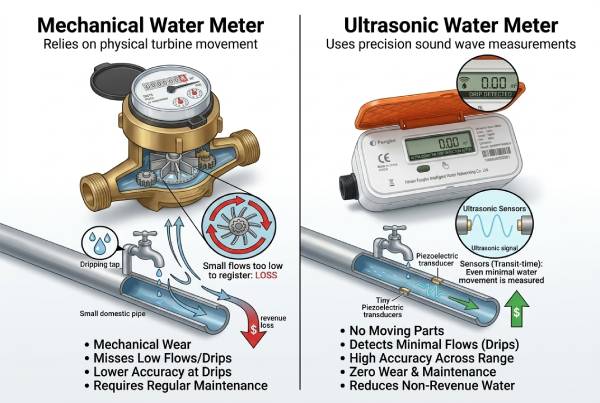
To understand why mechanical meters fall short, it helps to look at how they capture data. Mechanical meters measure consumption via turbine rotation. Water entering the meter physically forces an internal impeller or nutating disc to spin, which mechanically turns the odometer dials.
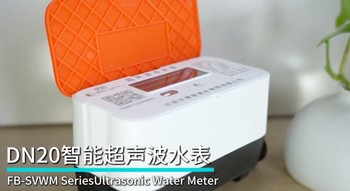
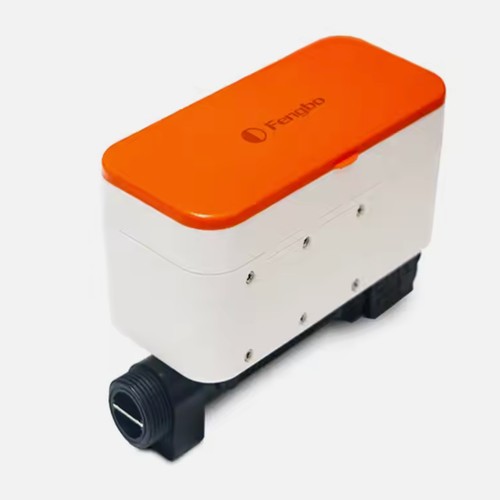
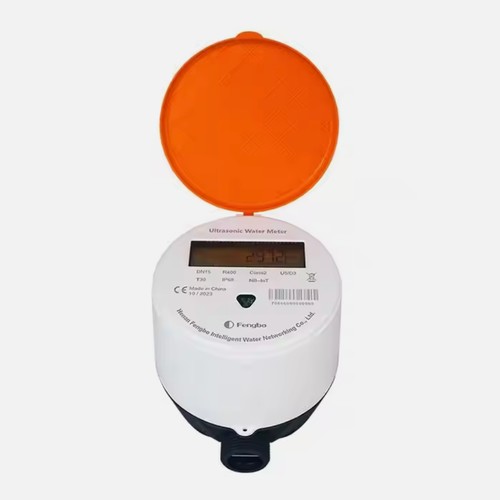
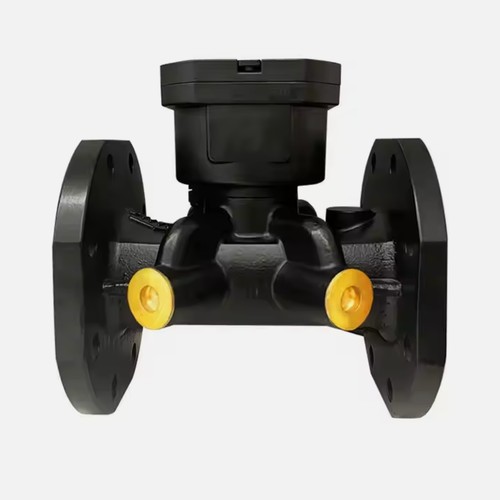
Ultrasonic water meters, on the other hand, feature an open, straight-through flow tube completely free of moving parts. They operate on the transit-time differential principle. The meter transmits high-frequency ultrasonic pulses both upstream and downstream through the fluid. The velocity of the moving water creates a precise time difference between these pulses (Δt=t1-t2). Because this time difference is directly proportional to the flow velocity, the internal microprocessor calculates precise volumes using acoustic data rather than physical force.
Head-to-Head Comparison: Key Metrics
| Performance Metric | Mechanical Water Meters | Ultrasonic Water Meters |
| Starting Flow Rate | High (≈0.015m3/h to 0.03m3/h) | Ultra-Low (≈0.002m3/h) |
| Measurement Accuracy | Deteriorates rapidly due to friction | Sustained over a 10-15+ year lifecycle |
| Pressure Drop | High (obstructed flow path) | Extremely Low (straight-through pipe) |
| Data Telemetry | Requires manual reading or add-on modules | Embedded IoT (NB-IoT, LoRaWAN, 4G) |
| Water Quality Sensitivity | High risk of clogging and blockage | Unaffected by sediment or mineral scale |
1. Eradicating Non-Revenue Water (NRW) with Low-Flow Sensitivity
The primary vulnerability of traditional mechanical water meters lies in their lack of sensitivity to low flow rates. Because a turbine requires physical momentum to spin, small amounts of water do not generate enough force to move the gears. This means common issues like dripping taps, slow-leaking toilet valves, and low-pressure flows go completely unrecorded.
This unmeasured water translates directly into Non-Revenue Water (NRW)—water that is treated and distributed but remains unbilled. While a mechanical meter typically struggles to register anything below 0.015m3/h a smart ultrasonic meter boasts an exceptionally low starting flow rate of just 0.002m3/h. By capturing these slight drips, ultrasonic meters eliminate apparent water losses, ensuring equitable billing and securing utility margins from day one.
2. Eliminating Maintenance Costs and Mechanical Wear
From the moment a mechanical meter is installed, it begins to wear out. The continuous friction of the moving parts guarantees a predictable trajectory of decreasing accuracy, typically requiring utilities to recalibrate or entirely replace residential meters every 3 to 5 years. Furthermore, residential grids frequently transport micro-sediments, rust particles, or hard-water minerals like calcium carbonate. In mechanical systems, these particulates lodge into the bearings, stalling or permanently damaging the meter.
With zero moving components, ultrasonic water meters experience zero mechanical wear. The acoustic signals penetrate the moving water unimpeded, maintaining factory-calibrated precision over an operational lifespan that easily exceeds 10 to 15 years. This drastic reduction in field maintenance calls and replacement cycles significantly lowers long-term capital expenditure (CapEx).
3. Real-Time Telemetry vs. Periodic Manual Readings
Legacy mechanical meters act as historical archives; they tell you how much water was used in the past, but only when someone physically reads the dial. If a major pipe burst or a hidden wall leak occurs, it may take weeks or an entire billing cycle to notice.
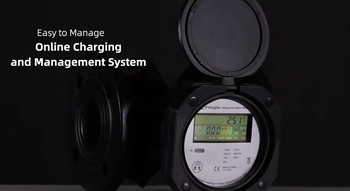
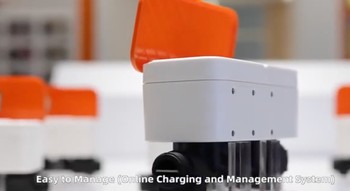
Smart ultrasonic water meters function as real-time edge computing devices. They sample flow data thousands of times per second and feature integrated IoT communication protocols like NB-IoT, LoRaWAN, and 4G. This enables the meter to instantly detect anomalies—such as continuous, uninterrupted 24-hour flow—and push automated leak alerts to a centralized dashboard. Utilities and property managers can intervene immediately, preventing catastrophic structural damage and massive resource waste.
Partner with Fengbo for Smart Water Solutions
Transitioning to ultrasonic technology is the single most impactful upgrade you can make for modern residential and industrial water supply networks.
As a premier manufacturer and supplier of high-precision ultrasonic water meters, Fengbo designs advanced smart metering solutions engineered for maximum durability and connectivity. We welcome inquiries from global agents, utilities, and project developers, and we offer comprehensive OEM/ODM services tailored to meet your exact technical standards.
Let Fengbo help you eliminate Non-Revenue Water and optimize your distribution network. Reach out to our engineering team today:
WhatsApp: +86 19337882352
Official Website:
fb-meter.com